
As a property owner, you likely view your land as your own private space where you can do as you please. Whether you dream of building a backyard deck, adding a second-storey addition, or opening a small home business, you have a vision for your property. However, before you can bring that vision to life, you must consider an often-overlooked but powerful force: municipal law.
Every city and town in Ontario is governed by a complex set of local rules and regulations that dictate how land can be used. These rules, primarily in the form of zoning bylaws, have a profound impact on what you can—and cannot—do with your property. They are designed to ensure orderly development, protect community character, and separate incompatible land uses, like keeping a noisy factory from being built next to a quiet residential street.
Understanding these local regulations is essential for any property owner, developer, or business owner. This guide will explain the basics of municipal law and zoning in Ontario and show how these rules affect your property rights.
What is Municipal Law and Why Does it Matter?
Municipal law is the body of law that governs the operations of local municipalities. It gives towns and cities the authority to create bylaws that regulate a wide range of activities within their boundaries, from parking rules and property taxes to noise control and, most importantly, land use planning.
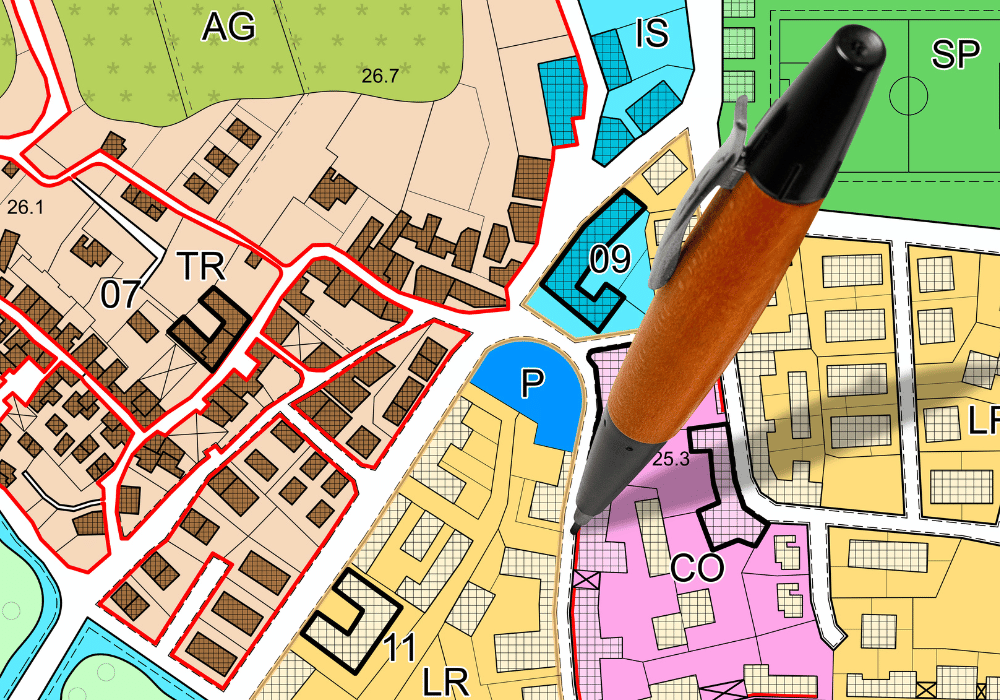
Zoning bylaws are the primary tool municipalities use to control land development. As the Government of Ontario’s Citizen’s Guide to Land Use Planning explains, these bylaws divide a municipality into different zones, such as residential, commercial, industrial, and agricultural. Each zone has a specific list of permitted uses and a set of detailed regulations.
These regulations can control:
- What type of buildings can be constructed (e.g., single-family homes, apartment buildings, retail stores).
- Where buildings can be located on a property (setbacks from property lines).
- The maximum height and size of buildings.
- The minimum lot size and frontage required.
- Parking and landscaping requirements.
If you fail to comply with these bylaws, you could face stop-work orders, fines, or even be forced to remove a structure you built. This is why understanding municipal law is not just for big developers; it is for any homeowner planning a project.
How Zoning Affects Your Property Plans
Let’s look at some common scenarios where zoning bylaws come into play for a typical property owner.
Building an Addition or a Deck
 You want to build a new sunroom off the back of your house. You hire a contractor and are ready to start, but your zoning bylaw has specific rules for “setbacks.” A setback is the minimum required distance between your building and your property lines (front, rear, and side). If your planned sunroom extends into this setback area, it will not be permitted. Similarly, there are rules for maximum “lot coverage,” which limits the percentage of your property that can be covered by buildings. A large deck or addition could push you over this limit.
Adding a Secondary Suite
With housing costs on the rise, many homeowners consider adding a basement apartment or a garden suite to generate rental income. While the provincial government has encouraged the creation of these secondary suites, their construction is still heavily regulated by local zoning. Bylaws will dictate the minimum size of the unit, parking requirements, and whether a separate entrance is needed. You cannot simply put a stove in your basement and call it an apartment; you must comply with the Ontario Building Code and local zoning to ensure it is a legal and safe dwelling.
Starting a Home-Based Business
Running a small business from home has become increasingly popular. However, whether your business is permitted depends entirely on your local zoning bylaw. Most residential zones have provisions for home-based businesses (often called “home occupations”), but with strict limitations. These rules are designed to prevent a home business from disrupting the residential character of the neighbourhood. They might restrict the number of clients you can have at one time, limit signage, and prohibit activities that generate noise, traffic, or odours.
When Your Plans Don’t Fit the Rules: The Application Process
What happens when your project does not perfectly align with the existing zoning bylaw? This is a common situation, and municipal law provides specific processes for seeking exceptions.
Minor Variances
If your project deviates from the bylaw in a small way—for example, your proposed deck is a few inches closer to the property line than permitted—you can apply for a “minor variance.” This application is made to your local Committee of Adjustment. To approve the variance, the committee must be convinced that the request meets four specific tests:
- Is it minor in nature?
- Is it desirable for the appropriate development of the land?
- Does it maintain the general intent of the zoning bylaw?
- Does it maintain the general intent of the official plan?
You will have to present your case to the committee, and your neighbours will have an opportunity to voice their support or concerns.
Zoning Bylaw Amendments (Rezonings)
If you want to use your property for a purpose that is not permitted in its current zone—for example, building a small commercial plaza on land zoned residential—you need to apply for a zoning bylaw amendment, or a “rezoning.” This is a much more complex and lengthy process than a minor variance.
A rezoning application requires a formal submission to the municipality with supporting studies, such as traffic impact reports or environmental assessments. It involves public meetings and a formal vote by the municipal council. This process can be challenging, as you must convince the council and the community that your proposed change is good for the area and represents sound land use planning.
The Value of Professional Legal Guidance
 As you can see, the world of municipal law is filled with detailed rules, specific application processes, and legal tests. Trying to handle these matters on your own can be confusing and lead to costly mistakes and delays. An experienced lawyer who specializes in this area can be an invaluable asset.
A lawyer can:
- Interpret Bylaws: They can review the zoning bylaw for you and provide a clear opinion on whether your project is permitted.
- Prepare Applications: They can professionally prepare and submit your minor variance or rezoning application, ensuring all required information and supporting documents are included.
- Represent You: A lawyer can act as your representative at committee or council meetings, presenting your case clearly and persuasively and addressing any concerns from staff or the public.
- Appeal Decisions: If your application is denied, a lawyer can advise you on your right to appeal the decision to the Ontario Land Tribunal, the independent body that hears appeals on land use planning matters.
Hiring a lawyer is not about creating conflict; it is about ensuring your project moves forward efficiently and correctly. Our team’s experience with various municipal law services gives us the insight needed to guide you effectively.
Whether you are a homeowner planning a renovation, a business owner looking for a new location, or a developer with a vision for a new subdivision, municipal law will shape your project. Understanding the rules from the very beginning is the key to a smooth and successful outcome.
At Nesbitt Coulter LLP, we have extensive experience helping clients navigate the complexities of municipal law and land use planning. We work with property owners, builders, and municipalities to find practical solutions and achieve development goals. We can help you understand your rights, prepare strong applications, and advocate for your interests.
If you have questions about your property and how local regulations might affect your plans, we encourage you to get expert advice. Contact us today to schedule a consultation and learn how we can help you turn your property vision into a reality.